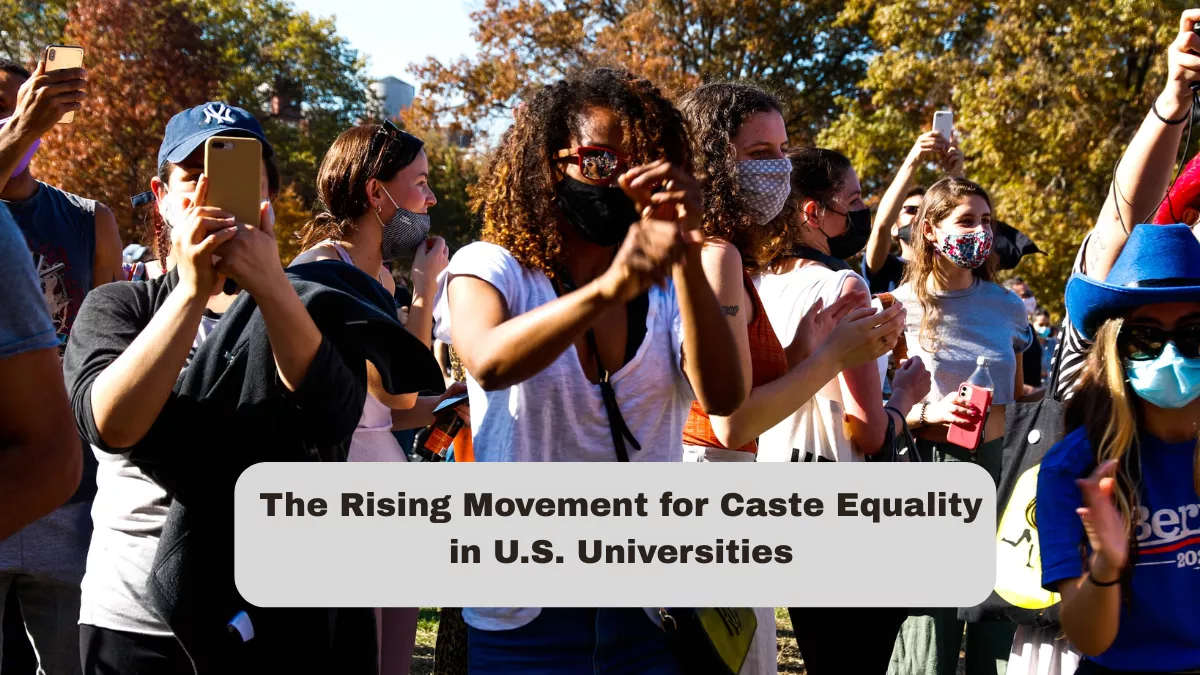
The conversation around caste equality is gaining momentum in U.S. universities as students, faculty, and activists shed light on the longstanding issues rooted in caste-based discrimination, primarily affecting South Asian communities. This rising movement challenges the historical invisibility of caste as a form of social stratification within academia and broader society, aiming to foster understanding, inclusion, and equal opportunity. By advocating for anti-discrimination policies, awareness programs, and structural changes, this movement seeks to dismantle caste barriers that have perpetuated inequality and prejudice.
Universities, often viewed as progressive spaces, are increasingly recognizing the necessity of addressing caste to ensure equity for all students. This article explores the origins, development, and impact of the caste equality movement in U.S. higher education, highlighting its significance in promoting social justice, cultural sensitivity, and institutional accountability in academic settings. It provides a comprehensive overview of the challenges faced, advocacy efforts, and the broader implications for campus diversity and inclusion initiatives.
Historical Context of Caste Discrimination and Its Overlook in U.S. Academia
Caste discrimination, a deeply entrenched social hierarchy primarily associated with South Asia, has historically been overlooked in U.S. academic environments despite a significant presence of South Asian students and faculty. The caste system categorizes individuals into rigid social strata based on birth, influencing social status, occupation, and access to resources. In the U.S., caste issues were long hidden under the broader umbrella of ethnic and racial discrimination and remained unaddressed due to a lack of awareness or political will.
This invisibility perpetuated systemic disadvantages for many students from marginalized caste backgrounds, including exclusion from social networks and limited access to academic opportunities. The failure to openly discuss caste has hindered acknowledgment of its impact on student experience and campus climate. Over recent years, advocacy groups and individuals have pushed universities to recognize caste as a distinct axis of discrimination, making this an emergent but crucial issue within American educational institutions and civil rights discourse.
The Emergence of Student-Led Advocacy for Caste Equality
Student activism has played a pivotal role in bringing the issue of caste discrimination to the forefront in U.S. universities. South Asian student organizations and allies have increasingly organized campaigns, workshops, and protests to raise awareness and demand institutional support for caste equality. These advocacy efforts emphasize the importance of including caste in diversity and anti-discrimination policies to protect vulnerable students from bias and harassment. By sharing their personal narratives and academic research, student advocates have successfully influenced policy reviews and the establishment of campus forums on caste.
Their work aims to cultivate safe and inclusive spaces where caste-based prejudice is openly discussed and actively challenged. These efforts are not limited to isolated campuses but have cascaded into wider coalitions that engage with national civil rights groups and legal bodies. The rise of student-led movements reflects a broader societal push towards acknowledging and remedying caste-based disparities as a critical concern in higher education.
Institutional Responses and Policy Changes
In response to mounting pressure from the community, several universities have initiated policy changes acknowledging caste discrimination as a form of bias warranting formal protections. This includes revising non-discrimination clauses to explicitly incorporate caste alongside race, ethnicity, gender, and other protected characteristics. Additionally, universities have introduced training modules, speaker series, and support groups focused on caste awareness and inclusion. Some institutions have established complaint mechanisms to address caste-related grievances and promote restorative justice. These policies reflect a paradigm shift in how universities understand and confront complex social identities.
However, the implementation of such measures remains inconsistent across campuses and often encounters resistance from stakeholders unfamiliar with or opposed to caste-based frameworks. Ensuring that policies translate into meaningful cultural change requires ongoing dialogue, education, and leadership commitment. As educational institutions grapple with these challenges, their responses shape the broader narrative about equity and justice in academic environments, carrying implications for future generations of students.
Intersectionality of Caste with Race, Ethnicity, and Other Identities
Understanding caste in U.S. universities necessitates examining its intersection with other social categories such as race, ethnicity, and class. Many South Asian students navigate multiple identities that influence their experiences on campus, including racialization, immigrant status, and socioeconomic background. Caste discrimination often intersects with these factors, compounding marginalization and complicating efforts to address inequities. For example, Dalit students—traditionally marginalized by caste—may face exclusion not only within South Asian communities but also racial stereotyping by the broader society.
This intersectionality challenges simplistic approaches that group caste under ethnic discrimination, urging institutions to adopt multifaceted policies that recognize varied experiences of oppression. Addressing these layers of identity is vital for fostering truly inclusive academic environments. Recognizing intersectionality also enhances solidarity among diverse student groups, promoting allyship and nuanced policy development that reflect the complex realities of caste in the contemporary U.S. university landscape.
Challenges and Resistance Within Academic Communities
Despite growing awareness and advocacy, the movement for caste equality in universities faces significant challenges, including denial, ignorance, and active resistance. Some faculty, administrators, and students dismiss caste as irrelevant or foreign to the American context, questioning the need for dedicated policies. This skepticism often stems from a lack of understanding or fear of exacerbating divisions within campus communities. Moreover, entrenched social hierarchies within South Asian diasporic communities sometimes manifest in university settings, with privileges accorded to upper-caste individuals influencing power dynamics.
These factors contribute to underreporting of caste-based discrimination and hinder progress toward systemic change. Educational institutions struggle to balance concerns about academic freedom, cultural diversity, and anti-discrimination measures. Overcoming these challenges requires persistent education, research, and dialogue, along with transparent accountability measures. The movement’s success depends on building broad-based support that transcends cultural boundaries and affirms the human rights of all students regardless of caste background.
Impact on Campus Diversity and Inclusion Initiatives
Incorporating caste equality into campus diversity and inclusion initiatives enriches broader efforts to create equitable academic environments. Recognizing caste as a critical dimension broadens the scope of diversity beyond typical racial and ethnic categories, encouraging more comprehensive conversations about privilege and oppression. This inclusion challenges universities to reexamine curricula, recruitment practices, and support services to better accommodate the needs of caste-oppressed students. It fosters heightened cultural competence among faculty, staff, and students, enabling them to identify and dismantle caste-based bias.
Furthermore, these efforts contribute to mental health improvements and academic success for marginalized students by validating their experiences and providing resources. Embracing caste within diversity frameworks also signals to prospective students and communities that the institution values social justice. Ultimately, these changes strengthen the fabric of campus communities by promoting equality, respect, and belonging, marking a critical evolution in higher education’s commitment to human dignity.
Legal and Policy Implications Beyond Campus
The rising movement for caste equality in U.S. universities has broader legal and policy implications that extend beyond individual campuses. Anti-discrimination laws at federal and state levels generally do not explicitly mention caste, leaving gaps in protection for affected individuals. Activists advocate for legal recognition of caste as a protected category to ensure enforceable rights and remedies against caste-based harassment and discrimination in educational and workplace settings. Some states and municipalities have begun exploring legislation that addresses caste issues, reflecting growing public awareness and political will.
Universities often serve as pioneering spaces for these discussions, influencing wider social and legal reforms. Additionally, incorporating caste into policy frameworks challenges existing notions of race and ethnicity in civil rights law, potentially reshaping legal paradigms in the U.S. The success of campus movements thus contributes to a national conversation on equity, human rights, and the definition of discrimination, pressing lawmakers to recognize caste’s significance as part of America’s diverse fabric.
Global Significance and Diaspora Engagement
The caste equality movement in U.S. universities is part of a larger global effort to address caste-based discrimination, especially within the South Asian diaspora. As centers of education and research, U.S. universities play a crucial role in shaping global discourse on caste, human rights, and social justice. The diaspora’s engagement creates transnational networks that support advocacy, share resources, and foster cross-cultural learning. This global perspective highlights caste as not merely a local or regional issue but a widespread human rights concern requiring international solidarity.
It connects U.S. campus efforts with historical anti-caste struggles in countries like India, Nepal, and Sri Lanka, strengthening the movement’s legitimacy and impact. By interacting with global policies and frameworks, such as United Nations declarations on discrimination, universities can contribute to international efforts aimed at ending caste oppression. The diaspora’s participation amplifies marginalized voices and encourages collaborative approaches to dismantling caste hierarchy worldwide.
Toward a Future of Inclusive Higher Education
The future of inclusive higher education hinges on the continued advancement of caste equality within campus policies, culture, and pedagogy. Achieving this vision requires sustained commitment from university leadership, faculty, students, and policymakers to address caste’s complex and nuanced realities proactively. Educational institutions must prioritize comprehensive training, curriculum reforms, and support systems that recognize caste discrimination’s unique challenges. Collaboration between different social justice movements and marginalized communities will be essential in building resilience and fostering inclusive solidarity.
By embedding caste equality into the broader framework of equity and inclusion, universities demonstrate their dedication to human rights and social progress. This evolution promises not only to enhance the academic and emotional well-being of caste-oppressed students but also to enrich the intellectual diversity and moral fabric of campuses. Ultimately, such efforts contribute to a more just society, reflecting higher education’s transformative potential in promoting equality and dignity for all.
Last Thought
The rising movement for caste equality in U.S. universities signals a transformative shift toward recognizing and addressing this historically marginalized form of discrimination. By fostering awareness, advocacy, and policy change, campuses are becoming more inclusive spaces that honor diverse identities and experiences. Continued efforts to educate, reform, and mobilize will be critical in dismantling caste barriers within academic environments and beyond.
This movement embodies a broader struggle for social justice and human dignity, underscoring the importance of equity in education as a cornerstone of democratic society. As universities embrace caste equality, they set a powerful example for other institutions and communities, inspiring collective action and systemic change toward a fairer future where all students can thrive without prejudice or exclusion.
FAQs
What is caste discrimination in the context of U.S. universities?
Caste discrimination refers to biases and prejudices based on inherited social stratification, primarily affecting South Asian communities, which impact a student’s experience and opportunities in academic settings.
How are students advocating for caste equality on campuses?
Students organize awareness campaigns, workshops, and protests to demand inclusion of caste in non-discrimination policies and create safe spaces for dialogue and support.
Have any universities officially recognized caste as a protected category?
Yes, some universities have revised policies to explicitly include caste discrimination, alongside race and ethnicity, though this remains inconsistent across institutions.
Why is caste an important issue for diversity and inclusion efforts?
Addressing caste broadens diversity frameworks to include a historically marginalized social hierarchy, promoting deeper equity and cultural understanding within academic communities.