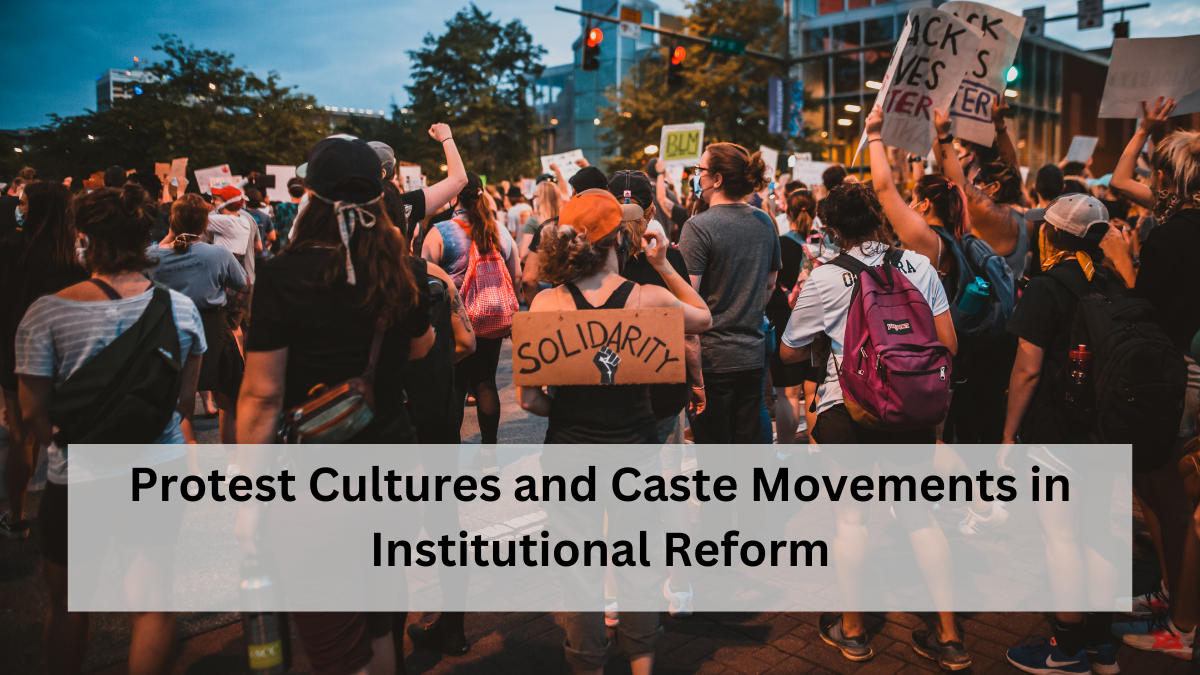
The relationship between protest cultures and caste movements has shaped the political and social trajectory of modern South Asia, particularly India. Across decades, systemic inequalities rooted in caste hierarchies have sparked waves of collective resistance, producing transformative outcomes in institutional reform. These movements have not only redefined grassroots activism but have also restructured educational, political, and bureaucratic frameworks through their persistent advocacy.
Understanding protest culture in the context of caste is central to decoding the larger framework of social justice and policy evolution within democratic systems. From spontaneous street demonstrations to organized political mobilizations, the interplay between activist ideologies and state institutions reveals how people power translates into tangible change. This article explores how caste-related protests evolved into structured reform agendas, examining their socio-political impact, mechanisms of resistance, and contribution to modern governance rooted in equality and representation.
Evolution of Protest Cultures in India
Protest culture in India has historically functioned as a vital channel for marginalized groups to challenge entrenched hierarchies, asserting ownership over democratic spaces that often excluded them. It developed under colonial rule, where anti-imperial movements fused nationalist identity with demands for social emancipation. After independence, the protest format became deeply localized, expanding its purpose to address caste oppression, gender inequality, and state neglect. Street marches, Satyagrahas, and peasant revolts created a participatory model of politics, where visible resistance complemented institutional negotiations.
The rise of student protests in universities, labor strikes, and Dalit movements brought a new language of dissent that questioned social structures and policy inertia. These collective actions cultivated a sense of vigilance within civil society, ensuring that democracy remained accountable to its grassroots. Eventually, protest culture matured beyond agitation—it became a civic tradition, symbolizing both dissent and dialogue, driving legislative debates and reorienting social policies toward inclusivity.
The Caste Question in Social Mobilization
The caste system, one of India’s most enduring social hierarchies, positioned Dalits and marginalized communities at the periphery of power for centuries. Mobilization around caste identities began as a survival mechanism against institutionalized discrimination, evolving into a robust movement advocating equal rights and dignity. Influential reformers like B.R. Ambedkar emphasized education and political participation as tools for liberation, leveraging both intellectual and grassroots mobilization to challenge orthodoxy.
Caste-based movements reshaped the discourse of public resistance, shifting the focus from economic exploitation to social humiliation as the core of oppression. Demonstrations, cultural festivals, and awareness campaigns became instruments of empowerment. The symbolism embedded in these protests fostered a new collective identity built on equality and human rights. Over time, caste movements transformed local grievances into national struggles, reframing justice not as charity but as restitution—thereby embedding the caste question within the broader framework of democratic reform in India.
Dalit Movements and Cultural Resistance
Dalit movements exemplify how protest can function as both political defiance and cultural assertion. The Dalit Panther Movement of the 1970s marked a turning point, merging radical activism with artistic expression—poetry, theater, and literature became vehicles for self-representation. Cultural resistance disrupted caste-based narratives that portrayed Dalits as passive victims, reinventing them as agents of change. The aesthetic of rebellion embedded in their symbols and slogans reframed protest as an act of dignity reclamation.
While earlier reformers pursued institutional engagement, Dalit movements challenged society’s moral foundations, contesting the cultural symbols of dominance. This approach inspired later generations of activists who integrated visual arts, films, and digital campaigns to amplify their voices. The transformation of culture into a battleground democratized resistance, inviting broader public empathy and engagement. Consequently, Dalit protests contributed not only to policy corrections but also to redefining the cultural imagination of equality and citizenship in modern India.
Institutional Reforms Shaped by Caste Protests
The persistent mobilizations spearheaded by caste-based movements significantly influenced the evolution of institutional reforms in India. The introduction of affirmative action and reservation policies in education, government employment, and political representation derived legitimacy from decades of collective agitation. Movements demanding proportionate representation successfully translated street-level dissent into policy frameworks that institutionalized inclusion. The Mandal Commission, established in the late 20th century, reflected this shift by recognizing social backwardness as a systemic barrier, not merely an economic condition.
As a result, reform became an instrument of social justice rather than administrative convenience. Protests also heightened accountability, compelling institutions to evaluate meritocratic ideals through the prism of structural inequality. Educational and bureaucratic systems began integrating mechanisms to counter caste bias, signaling that sustained activism could reform even entrenched power structures. Hence, caste movements not only redefined reform agendas but embedded equality as a permanent institutional ethos across governance frameworks.
Gender and Intersectionality in Protest Movements
Gender played a crucial yet often overlooked role in caste-centered protests, shaping how intersectionality influenced activism and institutional engagement. Women from marginalized communities experienced layered forms of oppression—both patriarchal and caste-based—and their participation deepened the ethical and emotional core of protest cultures. Female leaders such as Savitribai Phule and feminist Dalit collectives reframed resistance as an inclusive reform process where education, safety, and dignity formed inseparable goals.
Their engagement revealed how systemic hierarchies within both caste and protest spaces reinforced exclusion, prompting a reevaluation of leadership models. As feminist consciousness merged with caste activism, reforms expanded to incorporate gender-sensitive frameworks within affirmative action and policy design. Women’s narratives injected emotional authenticity into public discourse, strengthening solidarity across divisions. Ultimately, their involvement transformed protests into holistic movements addressing the collective realities of social injustice, demonstrating that liberation must account for both caste and gender equality simultaneously.
The Role of Educational Spaces in Reform
Educational institutions have historically mirrored societal inequalities while simultaneously serving as breeding grounds for transformative reform. Caste protests found fertile ground in universities, where debates on access, representation, and discrimination challenged traditional hierarchies. Student unions and progressive organizations acted as catalysts for legislative changes, pressing for equitable admissions, scholarships, and anti-discrimination frameworks. The struggles of universities like JNU and Hyderabad Central University revealed how marginalized students turned classrooms into spaces of resistance and discourse.
Institutional policy reforms, such as diversity mandates and caste-sensitive grievance redressal mechanisms, emerged from such sustained activism. Moreover, academia became the intellectual hub for reimagining social justice, producing knowledge that influenced policymakers and public consciousness. Education not only empowered individuals through mobility but also cultivated collective awareness around structural inequities. In essence, institutional reform within education encapsulated the broader democratic promise of transforming exclusionary spaces into inclusive zones of knowledge and empowerment.
Media Representation and Digital Resistance
The digital era revolutionized caste-based activism by transforming protest spaces from physical streets to virtual platforms where visibility became empowerment. Social media enabled marginalized voices to bypass traditional gatekeeping, democratizing narratives previously confined to elite discourse. Hashtags, online petitions, and digital art became catalysts of consciousness, amplifying localized caste struggles into global solidarity campaigns. Activists now employ visual storytelling and data journalism to expose institutional apathy, countering mainstream narratives that trivialize or invisibilize caste realities.
The digital sphere also fostered intersectional dialogues, connecting caste issues with global movements for racial and indigenous justice. However, this visibility brought new challenges—online backlash, surveillance, and misinformation targeting activists. Despite this, digital resistance sustained the vibrancy of protest culture, ensuring constant pressure on institutions to evolve. Thus, online activism has emerged as the new frontier of reform, merging technology, identity, and advocacy in pursuit of structural equality and systemic accountability.
Global Parallels and Transnational Solidarity
Caste-based protest cultures have increasingly drawn connections with global struggles against racial, ethnic, and economic oppression, creating transnational solidarity networks. Scholars and activists have linked Dalit resistance to African-American civil rights movements, Indigenous rights campaigns, and anti-apartheid struggles. This comparative framework deepened understanding of institutional discrimination as a global phenomenon, not a uniquely Indian narrative.
Global coalitions advocate for anti-caste frameworks within international human rights discourse, integrating caste equity into policy discussions at the United Nations and other global institutions. Such alliances also offered moral legitimacy to domestic protests by framing them within universal principles of dignity and equality. Transnational collaboration enhanced both visibility and strategic learning, inspiring new models of activism that combine local authenticity with global outreach. Consequently, caste movements evolved beyond India’s borders, engaging diasporic communities and contributing to a universal vocabulary of liberation that transcends cultural and geographic boundaries of injustice.
Last Thought
Protest cultures rooted in caste movements continue to redefine India’s democratic promise by bridging the gap between moral outrage and structural transformation. They illustrate how grassroots dissent translates into institutional change, proving that democracy thrives through continuous questioning. These movements remind society that equity is not gifted by institutions but secured through persistent struggle. As evolving protest forms—digital or physical—adapt to new realities, their essence remains consistent: resistance as a path to reform. Caste-based activism stands as both a moral compass and a democratic force propelling India toward an inclusive and accountable future.
FAQ’s
1. What is protest culture?
Protest culture refers to the traditions and practices of organized collective dissent aimed at challenging systemic power structures and advocating social or political change.
2. How do caste movements influence institutional reform?
Caste movements pressure governments and institutions to implement inclusive policies like reservations, representation, and anti-discrimination measures that promote equality.
3. What role did Dalit movements play in shaping modern protests?
Dalit movements introduced cultural resistance and identity assertion into protests, making them powerful tools for political empowerment and social awareness.
4. How has digital activism impacted caste-based protests?
Digital activism expanded caste protests globally by amplifying marginalized voices online, fostering solidarity, and holding institutions accountable through widespread visibility.