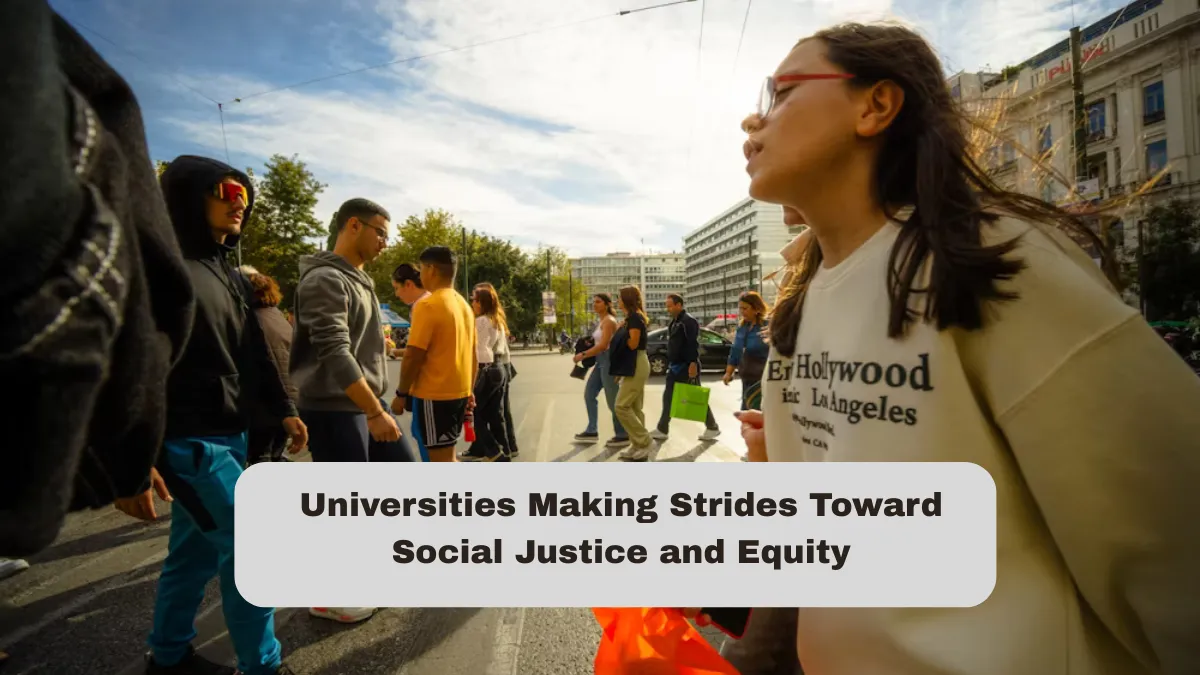
Universities have become crucial centers for advancing social justice and equity, helping shape policies, conversations, and actions that influence society on a global scale. From implementing inclusive admissions practices to addressing systemic biases in curriculum and campus culture, higher education institutions are reimagining their role in fostering fairness. Across the United States and internationally, universities are investing in diversity initiatives, supporting underrepresented communities, and expanding access to quality education.
Through research, advocacy, and community engagement programs, these institutions are tackling pressing social issues such as racial inequality, gender discrimination, economic disparity, and environmental justice. The quest for equity in academia extends beyond symbolic gestures; it’s about lasting structural reform and accountability. Universities are now leading movements that promote belonging, integrity, and open dialogue. This ongoing evolution highlights their commitment to social change and their essential role in preparing socially responsible leaders who will build a more just future.
Fostering Inclusive Campus Environments
Universities are transforming campus environments to be more inclusive, recognizing that a sense of belonging is foundational to student success and social justice. Administrators and faculty members are reexamining institutional policies and physical spaces to remove barriers that historically excluded marginalized groups. This includes creating multicultural centers, gender-inclusive housing, and disability access improvements. Many institutions have launched mandatory diversity and inclusion training for both students and staff, ensuring awareness of implicit bias and privilege. Universities are also working to diversify their faculty and leadership teams, bringing in voices that reflect broader perspectives.
Student organizations now play integral roles in policy advocacy, bridging communication between administration and underrepresented demographics. Additionally, mentorship programs aimed at first-generation college students and minority populations are helping build confidence and community. By embedding inclusivity in every aspect of campus life, universities create learning environments where respect, empathy, and individuality are core values that drive collective academic success.
Diversifying Academic Curriculum
A critical step toward equity in higher education is diversifying academic curriculum to reflect the histories, cultures, and contributions of marginalized communities. Universities have begun redesigning syllabi and introducing courses that explore race, gender, sexuality, and intersectional justice from multiple perspectives. Departments are now collaborating across disciplines to ensure diverse voices are represented in literature, history, and social sciences. Faculty training encourages educators to approach topics with cultural sensitivity and critical analysis.
Many institutions have adopted ethnic studies requirements that challenge students to question systemic oppression and colonial frameworks. This curricular shift not only disrupts traditional Eurocentric narratives but also empowers students to recognize global interdependence. In STEM fields, efforts focus on highlighting diverse innovators and encouraging underrepresented groups to pursue research opportunities. By embedding inclusion into coursework, universities create learning models that cultivate empathy, intellectual honesty, and an understanding of the social dynamics that shape human knowledge and progress.
Expanding Scholarships and Financial Access
Financial equity remains central to ensuring all students have equal opportunities to thrive in higher education. Recognizing the burdens of tuition and cost-of-living disparities, universities have expanded scholarships, grants, and work-study programs targeted specifically at underrepresented and low-income students. Many institutions are creating need-based initiatives tied to community service, leadership, or social justice engagement. Universities are also partnering with philanthropic organizations to establish endowments that subsidize education for marginalized demographics.
In recent years, debt forgiveness programs and tuition-free pathways for specific income brackets have become more common. Academic counseling services also support students navigating financial challenges that might otherwise hinder retention or graduation. The commitment to affordability reflects an understanding that socioeconomic barriers perpetuate injustice across generations. By prioritizing accessibility and economic support, universities align education with the principles of fairness, enabling broader participation in academic life and ensuring that future leaders represent diverse socioeconomic backgrounds rather than privilege alone.
Addressing Systemic Racism in Academia
Systemic racism has long permeated academic institutions, influencing admissions, faculty hiring, and research priorities. Universities making strides toward equity are now acknowledging this history and committing to change through bold structural reforms. Many have implemented anti-racism task forces that analyze institutional biases and recommend actionable solutions. Data transparency in admissions and hiring helps ensure accountability. Workshops and dialogue sessions encourage honest conversations about racial inequality, promoting healing and understanding.
Additionally, universities are revisiting statues, building names, and campus symbols that glorify colonialism or racial oppression, replacing them with tributes to figures who champion justice. Research centers focused on race and equity are emerging to drive scholarship grounded in systemic analysis and community empowerment. By confronting racism head-on instead of ignoring it, universities demonstrate that meaningful progress requires both humility and sustained action. The results are creating academic spaces where diversity is respected and equity becomes institutionalized in daily practice.
Promoting Gender Equality and LGBTQ+ Inclusion
Modern universities recognize that gender equality and LGBTQ+ inclusion are essential to genuine social progress. Campuses now feature resource centers that provide counseling, advocacy, and safe spaces for students of all gender identities. Inclusive policies regarding pronoun use, restrooms, and participation in sports aim to normalize respect for gender diversity. Faculty and staff training promotes awareness of gender-based discrimination and encourages inclusive classroom communication. Universities are further revising codes of conduct and sexual harassment policies to ensure quick, fair responses to misconduct.
Academic curricula increasingly explore gender studies, queer theory, and feminist perspectives to deepen understanding of inequality. Student-led movements have been pivotal in pushing administrations to adopt equitable policies, showing how grassroots activism within academia drives real transformation. These initiatives foster safer, more accepting academic climates that celebrate authentic self-expression while dismantling outdated stereotypes, proving that equality and belonging are cornerstones of a forward-thinking educational experience.
Community Partnerships for Equity
Universities are expanding their social justice mission beyond campus by forming partnerships that benefit surrounding communities. Community engagement programs now address pressing local issues such as housing insecurity, educational access, food justice, and environmental health. Faculty and students frequently collaborate with nonprofits and community leaders to conduct participatory action research that identifies inequities and develops sustainable solutions. Internships and service-learning courses allow students to apply theoretical knowledge toward real-world change.
Universities also host public forums and workshops that bring academic expertise to social movements, reinforcing the idea that education must serve society. These partnerships often lead to policy recommendations that influence city planning, economic development, and healthcare access. Importantly, this approach shifts the university’s role from an isolated institution to a collaborative stakeholder in regional equity. By building trust and co-creating solutions, universities strengthen democratic engagement and model what shared responsibility for justice truly looks like in action.
Mental Health and Emotional Well-being
Acknowledging that well-being is crucial to equity, universities are prioritizing mental health in their social justice frameworks. Students from marginalized backgrounds often face unique stressors, such as financial pressure, cultural isolation, or discrimination, which can impact academic performance and personal health. To address this, many universities are expanding counseling services, creating culturally competent wellness programs, and implementing peer support networks. Campus initiatives now emphasize psychological safety, encouraging open conversations about mental health stigma and accessibility.
Equity-driven approaches recognize that inclusion must encompass emotional well-being, ensuring all voices are heard without fear of judgment. Wellness workshops designed around identity, trauma, and resilience offer holistic resources. Institutions also invest in crisis response teams trained to assist students with sensitivity and confidentiality. By centering mental health in their justice efforts, universities affirm that true empowerment includes nurturing both intellectual and emotional strength—key to thriving in an equitable learning environment.
Research Centers and Policy Advocacy
The expansion of university research centers dedicated to equity and justice reflects academia’s influence on shaping real-world change. These centers study issues like racial inequality, climate justice, mass incarceration, and global human rights through interdisciplinary collaboration. They produce data-driven recommendations that inform government and nonprofit policies, bridging theory with practiced reform. Faculty and students engage in advocacy projects, from publishing studies on discrimination to advising lawmakers on equity-based legislation. Funding from grants and partnerships sustains critical initiatives aimed at measurable social outcomes.
Many universities also host annual conferences to share best practices and amplify marginalized scholars’ voices. Open-access publications ensure that information reaches broader audiences, promoting knowledge as a public good. By combining research excellence with moral purpose, universities advance evidence-based activism and accountability. This evolution reinforces their dual role as educators and catalysts for societal transformation through scholarly rigor and ethical commitment to justice.
Global Collaboration for Justice
Universities across the world are connecting efforts to strengthen social justice on a global scale. Partnerships between institutions foster international research, student exchanges, and programs focused on sustainability, peacebuilding, and human rights. Global learning opportunities challenge students to engage with complex ethical issues, recognizing inequality as a universal concern that transcends borders. Many universities participate in initiatives supporting refugees, indigenous communities, and under-resourced schools in developing regions. International conferences bring together scholars and activists who exchange ideas on inclusive governance and equitable education systems.
Joint degree programs now emphasize ethics, global responsibility, and sustainable development goals, preparing graduates to lead cross-cultural change. By promoting solidarity and empathy globally, higher education becomes a network of empowerment rather than competition. These collaborations remind us that social justice is interconnected; when universities unite across continents, they amplify their collective capacity to build a world grounded in fairness and human dignity.
Last Thought
Universities making strides toward social justice and equity are not only transforming their campuses but shaping the moral compass of society itself. Their initiatives show that fairness must be built intentionally through policy, inclusion, and empathy. Education thrives when it embraces diversity and challenges inequality at every level.
As these institutions evolve, they become more than centers of knowledge—they become engines of humanity. The true power of higher education lies not in prestige but in its capacity to uplift lives, dismantle injustice, and cultivate generations prepared to lead with purpose and compassion.
FAQs
What makes a university socially just?
A socially just university actively promotes inclusion, equity, and accountability through policies, curriculum, and community involvement.
How do scholarships support equity?
Scholarships reduce financial barriers, allowing underrepresented and low-income students greater access to higher education.
Why are diverse curriculums important?
Inclusive curricula reflect multiple perspectives, challenge stereotypes, and encourage critical thinking about systemic injustice.
How can students help promote social justice on campus?
Students can join advocacy groups, participate in equity initiatives, and hold institutions accountable for diversity and inclusion goals.